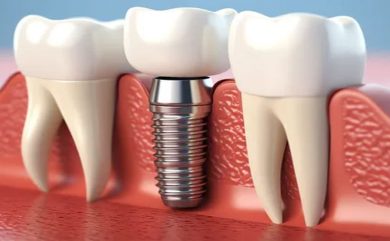
What types of dentures are attached to implants? The types of dentures attached to implants are generally either fixed or removable. Fixed dentures are the type of dentures that are bonded to implants, just like veneers placed on natural teeth. What Types of dentures are attached to implants? This can be applied to a single implant or to a full-mouth implant. Alternatively, it can be attached to implants that the patient can remove and reattach […]
Implant Videos
What is a Zircon Metal-Free Crown?
What is a Metal-Free Zirconia Crown? What are its Features? Zirconia, a metal-free crown, is a fixed prosthesis developed in the last decade as an alternative to porcelain without metal underneath. It contains a substructure called zirconium oxide, which is similar to the metal support. It also has porcelain on top. This is also comparable to metal-supported crowns, as it can withstand pressure very well and […]
What is a Porcelain Metal-Supported Crown?
What is a Porcelain-Metal Crown? What are its uses? Porcelain-metal crowns are fixed prosthetics used to restore the shape of decayed or damaged teeth, often called veneers. Metal-supported crowns, or metals made of nickel or gold, are used to support the forces beneath them. Metal-supported crowns are generally preferred over implants. This is also because […]
Is it possible for implants not to be accepted by the body?
Can Implants Be Rejected by the Body? What Should Be Done If They Are? Implants are well tolerated and accepted by the body. It's generally rare for implants to be accepted by the body. Such a situation hasn't been reported in the literature. Loss of implants, whether due to surgery or infection, often leads to the need for removal, and our patients often say, "My body rejected the implant."
Can Diabetics Get Implants?
Can Diabetics Get Implants? In What Situations? There's no harm in having implants for diabetics if their diabetes is under control. This has been proven by research. If your blood sugar level is within what we consider normal, for example, if your fasting blood sugar is below 160-170, it's not considered normal, but it's not a contraindication to implants. Normally, fasting blood sugar should be around 100-110. However, […]
Why Do Implants Get Inflamed?
Why do implants become infected? What should be done? Inflammation around implants is very rare. Inflammation can occur around implants due to factors such as poor oral hygiene, surgical damage to the area during implant placement, or insufficient gum tissue. However, this condition is certainly treatable. […]
Can Implants Be Performed on People Who Grind and Clench Their Teeth?
Are Implants Suitable for People Who Clench and Grind Their Teeth? In Which Situations Should They Be Considered? Clenching and grinding are considered both more important and more detrimental to implant success than smoking or diabetes. One of the most significant factors in implant loss is the early damage suffered by teeth grinding and clenching. Of course, avoiding teeth grinding and clenching altogether is […]
Can Smokers Get Implants?
Can Smokers Get Implants? In What Circumstances? Smokers can get implants. Many patients smoke, and smoking naturally damages the gums and healing process. However, this damage may not be severe enough to completely prevent the implant from fusing with the bone. But we can't say it's harmless either. Just as smoking harms the body, it also harms oral health […]
Are Turkish-made Implants (Screw-Retained Teeth) Safe?
Are Turkish-made implants (screw-retained teeth) safe? How safe are they? While the safety of implants is a hotly debated topic worldwide, it can be evaluated as follows. There are companies that manufacture implants according to specific standards, and there are also companies that produce them illegally. It's said that illegal production, including orthopedic implants, occurs worldwide, and even in our country. Here, the most […]
How Can We Compare the Feeling of a Tooth Implant in the Mouth?
How can we compare the sensation of an implanted tooth in the mouth? Is it uncomfortable? The sensation it provides in the mouth is quite difficult to distinguish from that of natural teeth after a certain period of time. Of course, there is a fundamental difference, such as the direct integration into the jawbone, whereas natural teeth are attached to the bone by very thin ligaments. Some of our teeth, especially our canines, can provide us with certain sensations we call depth perception. […]